Forge-Craft (Magically Enhanced Metallurgy)
Forge-Craft (Magically Enhanced Metallurgy) is a distinct magical discipline within Landorya. Forge-Craft infuses metals, obsidian, and volcanic materials with concentrated fire magic during smithing. Weapons and structures gain properties beyond ordinary physics. To a pra… Its power is typically sourced from Lava-Crystals and Ember-Chisels channel it. They store and amplify ambient fire magic from active volcanic conduits beneath the Scorching Spine's forge-cities.. Practitioners must account for the following limits: True Forge-Craft needs living lava or a perpetual forge-fire linked to the Heat-Glyph Grid. Metals worked away from volcanic heat lose their magical properties within one turning… Scholarly records also note key risks: A forge-mage who loses focus mid-temper risks catastrophic feedback. Bound fire magic erupts through the metal, shatters the work, and sprays molten shrapnel across the Crucible H…
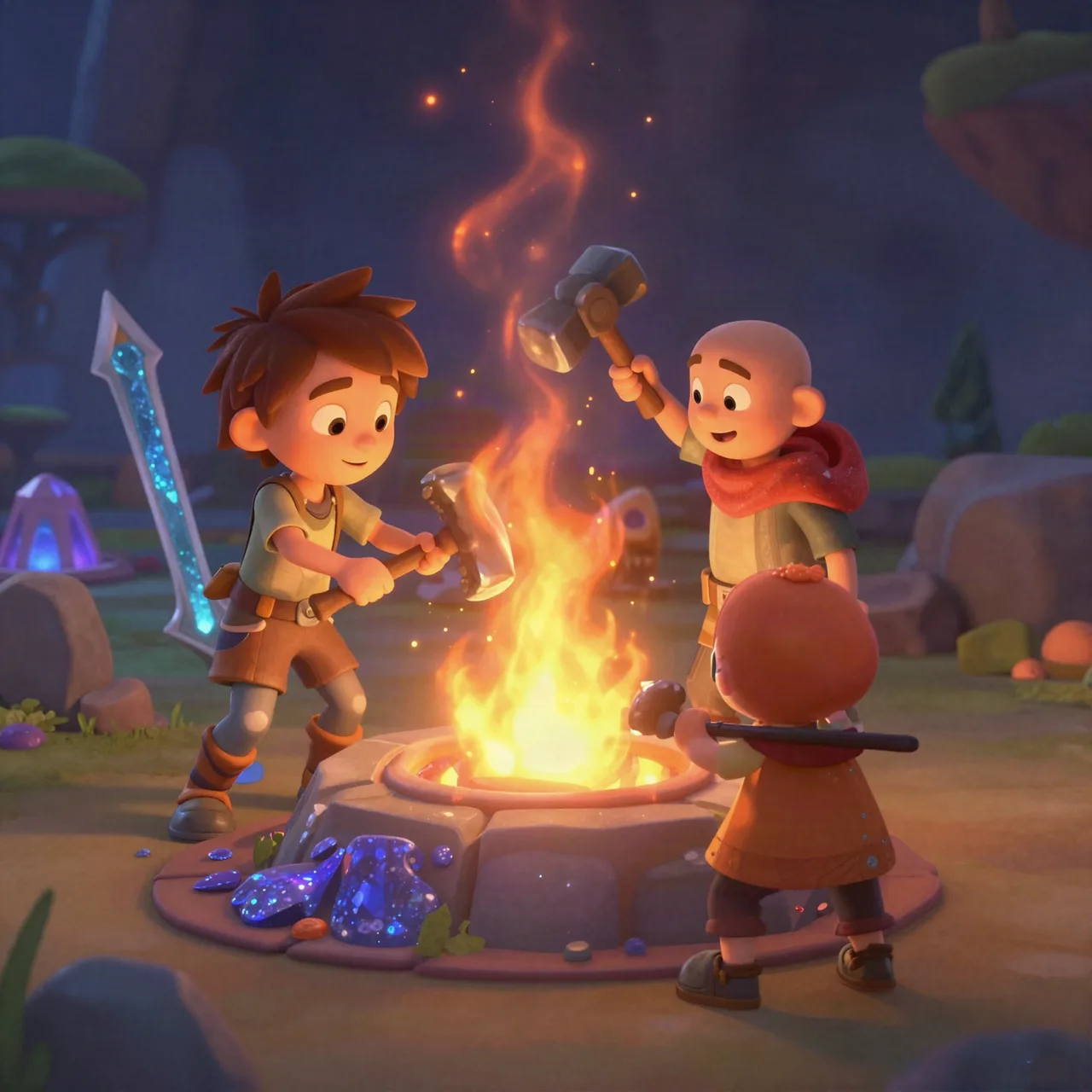
Magic Profile
- Nature
- Forge-Craft infuses metals, obsidian, and volcanic materials with concentrated fire magic during smithing. Weapons and structures gain properties beyond ordinary physics. To a practitioner each hammer-strike is a conversation with the flame locked inside the ore.
- Source
- Lava-Crystals and Ember-Chisels channel it. They store and amplify ambient fire magic from active volcanic conduits beneath the Scorching Spine's forge-cities.
Overview
Forge-Craft (Magically Enhanced Metallurgy) is a distinct magical discipline within Landorya. Forge-Craft infuses metals, obsidian, and volcanic materials with concentrated fire magic during smithing. Weapons and structures gain properties beyond ordinary physics. To a pra… Its power is typically sourced from Lava-Crystals and Ember-Chisels channel it. They store and amplify ambient fire magic from active volcanic conduits beneath the Scorching Spine's forge-cities.. Practitioners must account for the following limits: True Forge-Craft needs living lava or a perpetual forge-fire linked to the Heat-Glyph Grid. Metals worked away from volcanic heat lose their magical properties within one turning… Scholarly records also note key risks: A forge-mage who loses focus mid-temper risks catastrophic feedback. Bound fire magic erupts through the metal, shatters the work, and sprays molten shrapnel across the Crucible H…
Key Aspects
0
Pyrosteel Tempering, folding fire magic into steel for edge and heat-resistance
1
Magma-Glass Shaping, cooling directed lava flows into architectural and artistic forms
2
Heat-Rune Inscription, etching functional fire-glyphs into finished metalwork with Ember-Chisels
3
Ember-Weave Craft, binding volcanic fiber into fire-resistant textiles through sustained low heat
4
Obsidian-Edge Ritual, controlled fracture-magic for surgical-quality blades
Practitioners
0
Pyrakian Master-Smiths, ordained forge-priests who oversee major weapon and armor works
1
Ember-Scribes, rune-inscribers who add arcane function to finished metalwork
2
Lava-Shapers, engineers who handle raw magma as a construction medium
3
Drakonian Forge-Heirs, modern inheritors of Pyrakian smithing in the Obsidian Citadel
Limitations
True Forge-Craft needs living lava or a perpetual forge-fire linked to the Heat-Glyph Grid. Metals worked away from volcanic heat lose their magical properties within one turning of the season. Each major work spends a measurable Lava-Crystal charge. Exhausted crystals may take years to recharge naturally.
Common Applications
- ✦ Living-Lava Temper, plunging a blade into a magma flow while holding a binding invocation
- ✦ Heat-Rune Seal, inscribing an active fire rune that triggers on impact or thermal contact
- ✦ Magma-Glass Bloom, guiding a lava surge through a mold into one flawless architectural panel
- ✦ Ember-Lock, permanently storing a charge of fire energy in a forged object for later release
- ✦ Obsidian-Split Rite, a ritual fracture-strike for a blade edge finer than any grinding wheel
Cultural Significance
Forge-Craft was the economic engine of Pyrakian civilization. Pyrosteel weapons, Magma-Glass architecture, and Obsidian Blades were prized from Talamhari tunnel-networks to Zephyrian sky-ports. Drakonian forge systems of the Obsidian Citadel and Forgepeak copy Pyrakian Crucible Hall design directly. Fire-rune forge infrastructure remains one of the most tangible living legacies of the Pyrakian age.
Lore
The oldest surviving passage of the Cinder Codex records that the first Pyrosteel blade was not made by human hands alone. Pyrathon the Undying is said to have plunged the unfinished metal into the planet's core and returned it glowing with a light that never fully faded. Pyrakian Master-Smiths were therefore ordained intermediaries between the mortal world and the Fire Primordial. Their Crucible Halls were temples as much as workshops. When Pyrakian civilization began to wane, deliberate transmission of Forge-Craft secrets through the Rite of Ember-Passing kept the art alive in Drakonian hands. The Drakonian Obsidian Order still honors that inheritance with a perpetual forge-fire in the Obsidian Citadel, lit from a flame traced in unbroken line to Ignis Aeterna.